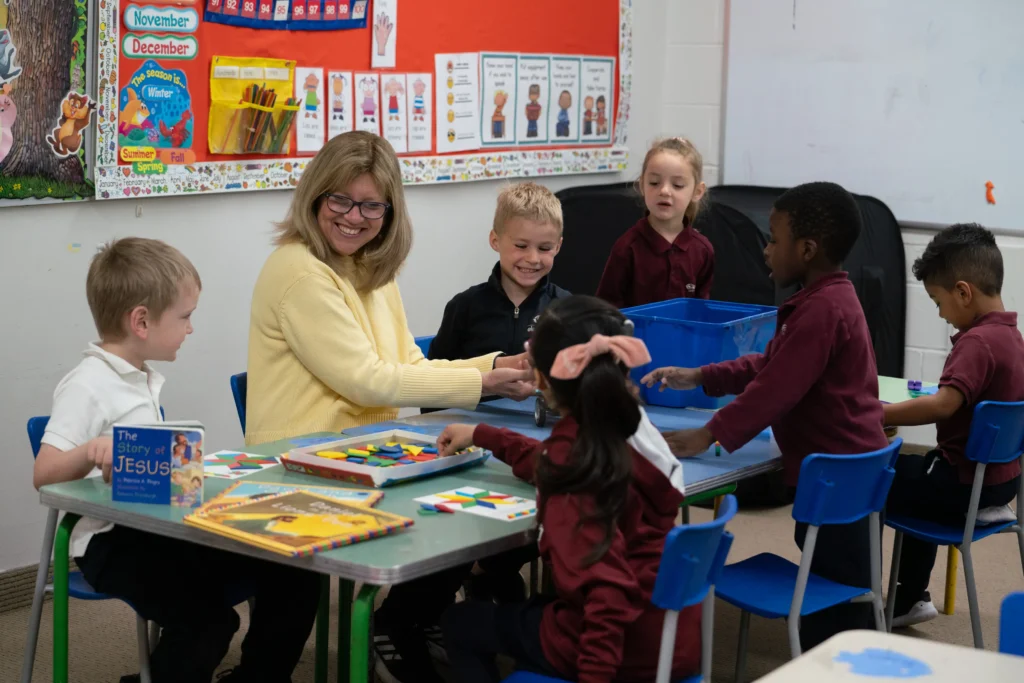


As I watch children arrive at school each morning, I am continually reminded of the importance of community in a child’s education.
God did not create us to live alone.
It’s a simple truth, but one that feels increasingly counter-cultural in our modern world. As parents, we’re navigating an unprecedented landscape, one where our children can have hundreds of online “friends” yet still feel profoundly lonely. Where they can access unlimited information, but struggle to form meaningful connections. Where screens offer constant stimulation, but genuine community feels harder to find than ever.
This year, as I’ve reflected on what makes education truly transformative, I keep coming back to one essential element: community.
The Isolation Epidemic
Study after study reveals rising rates of anxiety, depression, and loneliness among young people. Despite being the most digitally connected generation in history, this generation often feels disconnected from what matters most: real relationships with real people who know them, challenge them, and care about their growth.
The fragmentation of modern childhood is real. Between packed schedules, screen time, and the loss of neighbourhood play, many children move through their days interacting with age-segregated groups in isolated pockets of activity. Sports team here, academic class there, online gaming community somewhere else entirely. Few experiences invite them into an authentic, multi-generational community where they can see themselves as part of something larger.
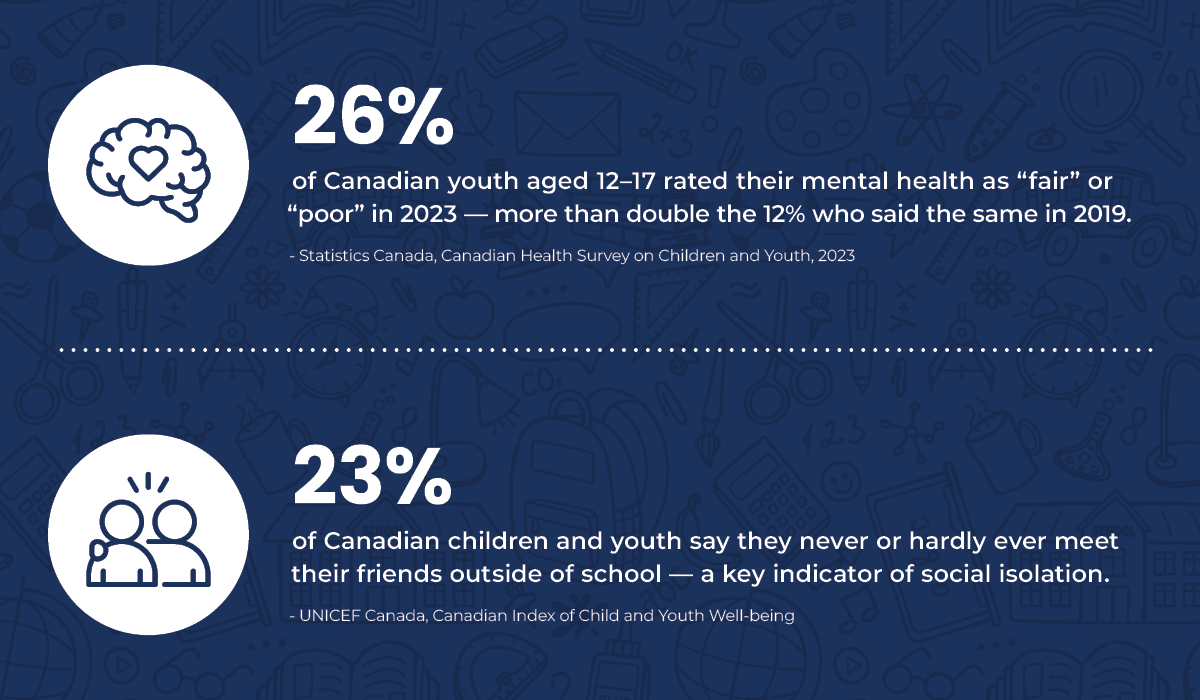
The research confirms what many parents already sense: something essential is missing. Statistics Canada puts a number to it — 26% of Canadian youth aged 12–17 rated their mental health as “fair” or “poor” in 2023, more than double the rate just four years earlier. But if data could fix this, it already would have. The problem isn’t a lack of information, it’s a loss of the kind of environment where children genuinely belong to something larger than themselves. The data tells us something is broken. Our faith tells us why and what to do about it.
The Faith Foundation
In a Christ-centered school, this commitment to community isn’t just a nice educational philosophy; it’s a reflection of who God created us to be. We’re made in the image of a relational God, designed for connection with Him and with one another. When Jesus summarized all of God’s commandments in Matthew 22:37-40, He distilled them into two imperatives: love God and love your neighbour.
This foundation changes everything. It means every interaction becomes an opportunity to practice the values that reflect Christ’s heart: acting respectfully, accepting responsibility, pursuing growth, and serving others. It means children learn that they are members of a body where each person matters and has unique gifts to contribute (Romans 12:4-8).
It also means when children stumble, they’re met not with harsh judgment but with grace and guidance toward growth. They learn that making mistakes is part of the journey and that our communities become stronger when we help each other improve.
Practical Ways Community Shapes Learning
Lynn E. Swaner and Andy Wolfe, in their book Flourishing Together, explain what a school looks like as it becomes a real community by fostering enduring relationships. Students can develop a relationship of safety and trust with educators. They experience making mistakes or being let down and learn to repair relationships in grace and truth. At ERCS, this isn’t just abstract philosophy. Community-centered education shows up daily in concrete ways:
Cross-age connections create natural mentorship. Older students develop leadership and empathy by helping younger ones. Younger students gain confidence from the attention and example of older peers. Everyone learns that their actions impact others and that they have something valuable to offer.
Shared experiences such as team sports, group projects, and school-wide events teach children to work through challenges together, celebrate each other’s successes, and push through difficulties for the sake of the team. These are the crucibles where character is formed.
Family involvement reminds children that education isn’t separate from life, it’s woven into the fabric of who they are and who they’re becoming. When our parents and teachers partner together, our kids receive consistent messages about what matters, and they see the adults in their lives united in purpose.
Service opportunities shift children’s focus from “what can I get?” to “what can I give?” This outward orientation is perhaps the most powerful antidote to the self-focused anxiety that plagues so many young people today.
Why This Matters for Your Family
If you’re exploring educational options for your child, I encourage you to ask potential schools not just, “What will my child learn?” but “How will the school community contribute to who my child will become?”
Your child will spend thousands of hours in their school environment. Those hours will shape not just their academic knowledge but their understanding of relationships, their sense of belonging, their vision of what it means to contribute to something larger than themselves.
In a world that increasingly pulls us apart into isolated digital spaces and age-segregated silos, choosing an education centered on authentic community is a countercultural act. It’s saying yes to something deeper than convenience or academic metrics. It’s choosing to let your child grow and develop in an environment designed to help them become fully themselves, not despite community, but because of it.
An Invitation
God did not create us to live alone, but to grow, learn, and develop to become more like Him each day. This growth can only happen in communities; in real, messy, grace-filled communities where we practice loving our neighbours even when it’s hard, where we learn to serve even when we’d rather be served, where we discover that our greatest joy comes not from what we accomplish alone but from what we build together.
That’s the kind of education worth investing in. That’s the kind of community worth joining.
If you’re curious about what community-centered, Christ-focused education could mean for your family, I’d love to continue the conversation. Because the truth is, we’re not just educating individual students—we’re shaping the generation that will lead our communities in 2040 and beyond. And that work is too important, too foundational, to do alone.